
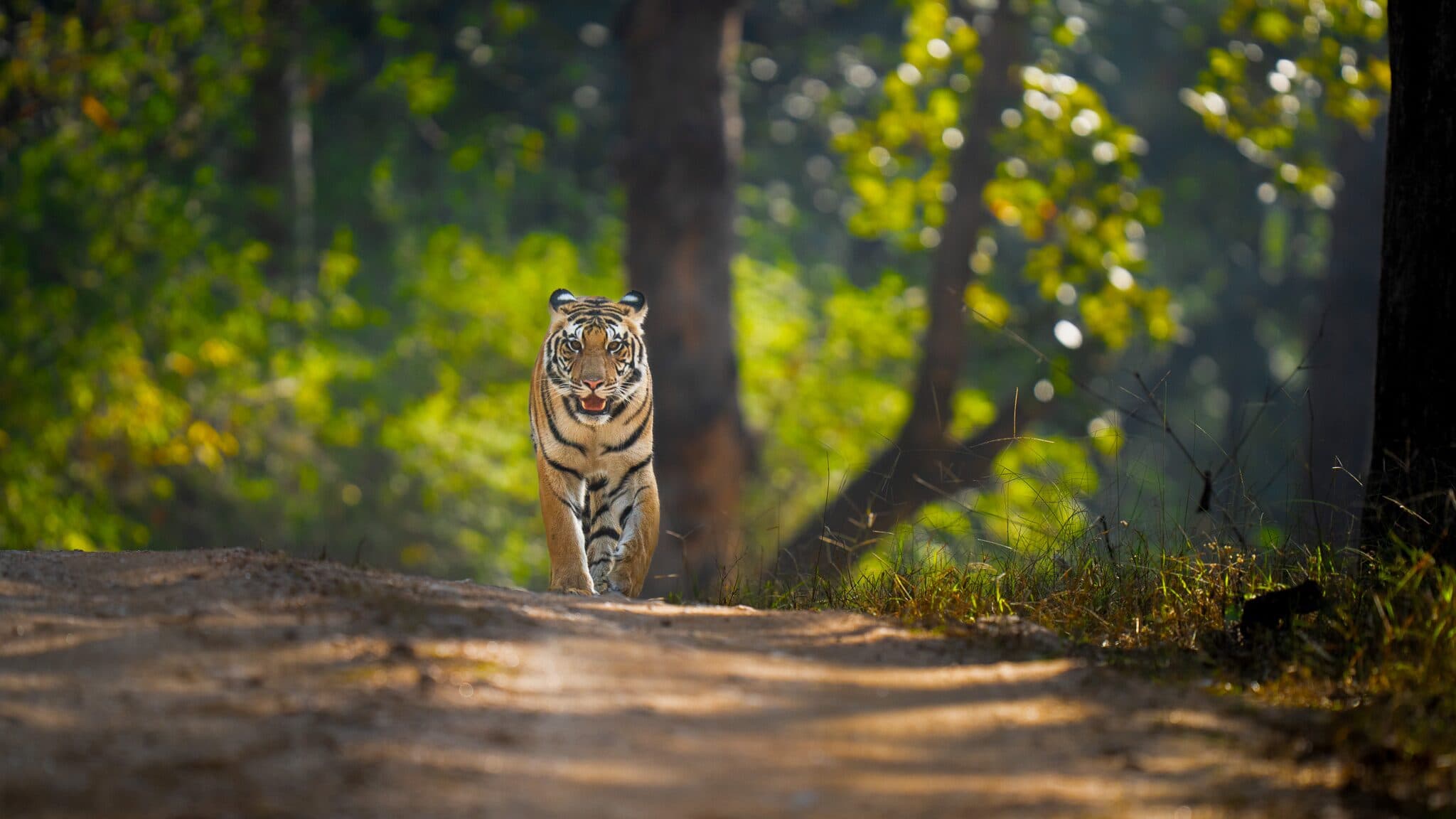
Kanha National Park
Meadows, sal forests, and signature winter light—one of India’s most complete safari landscapes for photographers.
Kanha — quick facts
A clean snapshot to plan seasonality, zones, and trip length.
Why people keep coming back
Light, habitat variety, and long, patient drives that reward photographers and wildlife lovers alike.
Winter light filters through sal forests like theatre—surreal in person and through the lens. Attenborough’s Tiger film followed tigress Laxmi here.
Kanha’s greatest achievement: pulling the hardground Barasingha back from near extinction—those herds still shape the predator story.
Open grasslands raise visibility for tigers and co-predators—chital, sambar, gaur, dholes, and 350+ birds in one living mosaic.
Zones to plan for
Zone choice changes light, crowd rhythm, and the feel of the drives.
Classic sal-forest textures and early-morning light.
Core landscape feel—mix of meadow and forest.
Great for meadow edges and a different gate rhythm.
Quieter routes and strong exploration potential.
Common photographic subjects
Exact sightings vary—but Kanha consistently delivers strong moments across species.
Best time to visit
Season runs October–June. Closed July–September for monsoon rest.
Comfortable and famous for the signature canopy light and misty meadows.
Hotter, but often higher movement around water and shade lines—great for intensity.
Getting to Kanha
Fly to Jabalpur, then drive about 3–4 hours to your gate—well connected from major Indian cities.
Jabalpur is the usual gateway, then a road transfer to Kisli, Mukki, or Sarhi sides.
Railheads in the region connect to a final drive.
Ideal for circuits with Pench, Bandhavgarh, or Panna when permits align.
Photography tips
Kanha is about light and composition—these are the tips that pay off most.
Kanha’s magic is often slow: a shaft of light, a meadow edge, a deer line—perfect for story frames.
We plan drives that alternate open meadows (clean backgrounds) with forest tracks (dramatic canopy and texture).
Carry a second setup for habitat frames. Kanha can gift ‘small subject, big landscape’ moments.
A few frames from Kanha
Tap a frame to expand. Browse the full gallery filtered to this park.
Common questions
What’s special about Kanha vs other central Indian parks?+
How many safaris should I do in Kanha?+
Which gate/zone should I choose?+
Want us to plan your Kanha safaris?
Tell us your dates and focus (photography light, tracking, or a balanced journey).
Keep exploring
Jump to the next or previous park in our expedition list.
Sal forests, golden grasslands, Ramganga river frames, and standout birdlife—an ecosystem-rich safari canvas.
Dry deciduous teak, wild dogs, and river-edge drama—Kanha’s quieter neighbour with a legendary tigress legacy.
Related parks
Compare a few other parks—each has a distinct style of safari, light, and landscape.
Dense sal forests, bamboo, and close-range tiger country—heritage woven into the jungle.
Open dry deciduous forest, charcoal roads, and waterhole magnets—built for high-contrast, cinematic tiger frames.
Dry deciduous teak, wild dogs, and river-edge drama—Kanha’s quieter neighbour with a legendary tigress legacy.
Read before you go
These planning guides cover what matters most for your safari.