
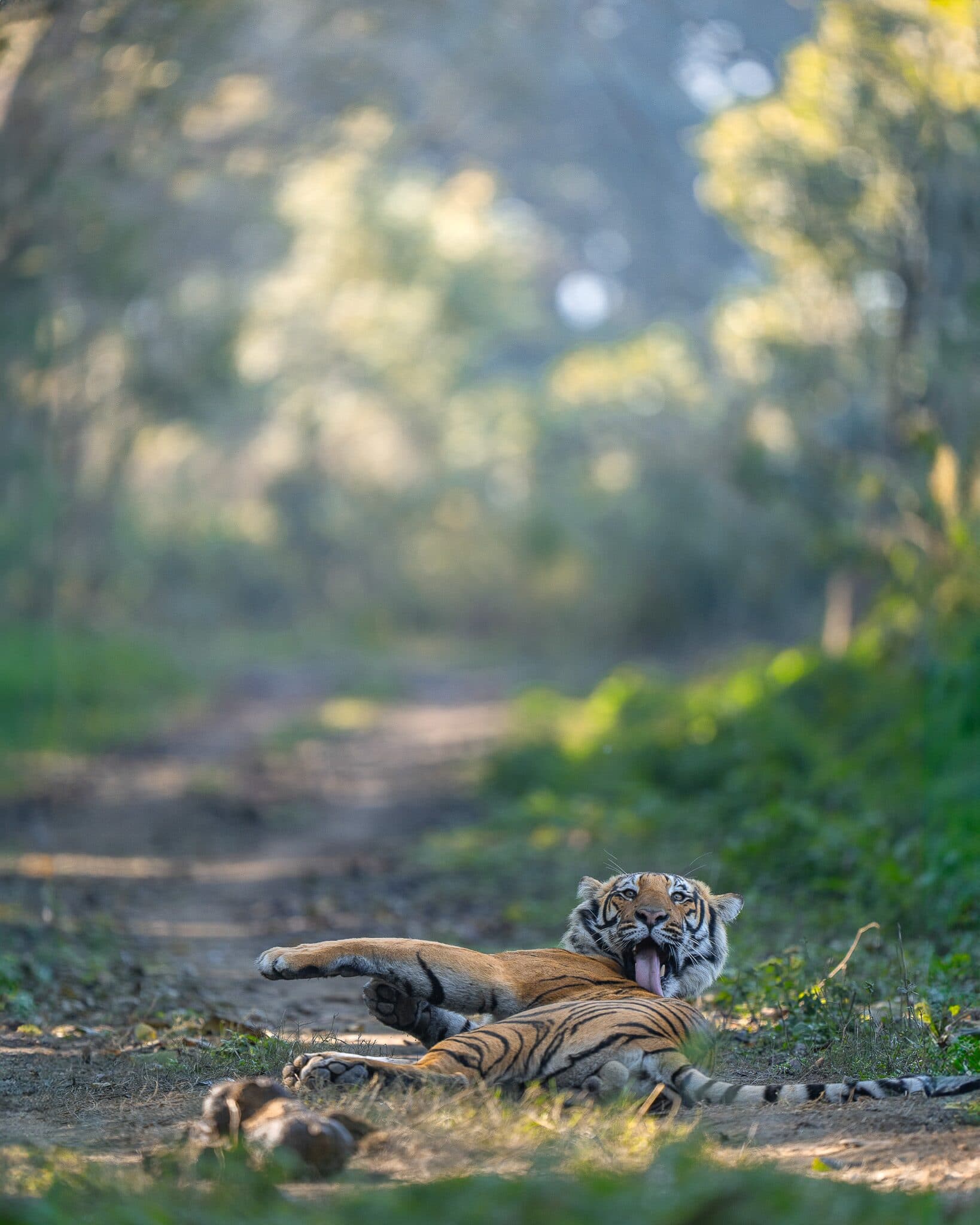
Dhikala, Jim Corbett National Park
A river-first wilderness of sal forests and golden grasslands—built for tigers, elephants, and standout birdlife.
Corbett — quick facts
A clean planning snapshot (seasonality, access, and what this safari feels like).
What makes Corbett special
Biodiversity, habitat variety, and photographic drama—from rivers to sal forests to grasslands.
The most iconic Corbett landscape—open sightlines, dramatic light, and the chance of wildlife moving through wide frames.
River edges, sandbanks, and pale stone beds create layered compositions (especially at first light).
Corbett isn’t only big cats—elephants, deer, otters, and birdlife often share the same scene.
Key safari zones
Zone choice changes the trip feel: open landscapes, dense tracks, or bird-rich terrain.
Iconic grasslands + river edges. Designed for ‘big landscape’ safari storytelling.
Classic forest tracks and meadow edges—often a strong all-rounder.
Typically open for longer windows; useful for flexible trip dates.
Hill-side and riverine moods—great for birders and varied terrain.
Species you may encounter
Corbett is not just tigers—it’s a full ecosystem.
Best time to visit
We plan around your comfort and goal (photography light vs action near water).
Comfortable temperatures and soft light. Some mornings can be foggy, creating moody frames.
Hotter—but often more movement around water. Great if you can handle heat and want higher intensity.
Getting to Corbett
Share your start city and we’ll propose a clean route with buffers for safari timings.
Most guests route via Delhi/NCR, then drive to Ramnagar.
Ramnagar is the common rail gateway. From there it’s a short transfer to the park side.
If flying, we’ll route you to the nearest practical airport for your schedule, then connect by road.
Photography tips for Corbett
Field-proof advice: light, flexibility, and stability.
Winter mornings can be misty—great for moody frames. We time routes so visibility opens in the grasslands.
Corbett can switch from tiger story to bird story instantly. A flexible zoom range is gold here.
Bring a beanbag and settle your window position early—Dhikala’s open frames reward clean compositions.
A few frames from Corbett (Dhikala)
Tap a frame to expand. Browse the full gallery filtered to this park.
Common questions
Are tiger sightings guaranteed?+
What’s special about Dhikala?+
How many safaris should I plan?+
Want a Corbett safari plan built for your dates?
Tell us your dates, group size, and whether your focus is photography, wildlife immersion, or a balanced journey.
Keep exploring
Jump to the next or previous park in our expedition list.
Open dry deciduous forest, charcoal roads, and waterhole magnets—built for high-contrast, cinematic tiger frames.
A photographer's paradise—winter light through sal forests, regal tigers, and the endangered hardground Barasingha.
Related parks
Compare a few other parks—each has a distinct style of safari, light, and landscape.
Bold tigers against ancient ruins and fort backdrops—rare frames found nowhere else.
A photographer's paradise—winter light through sal forests, regal tigers, and the endangered hardground Barasingha.
Dense sal forests, bamboo, and close-range tiger country—heritage woven into the jungle.
Read before you go
These planning guides cover what matters most for your safari.