
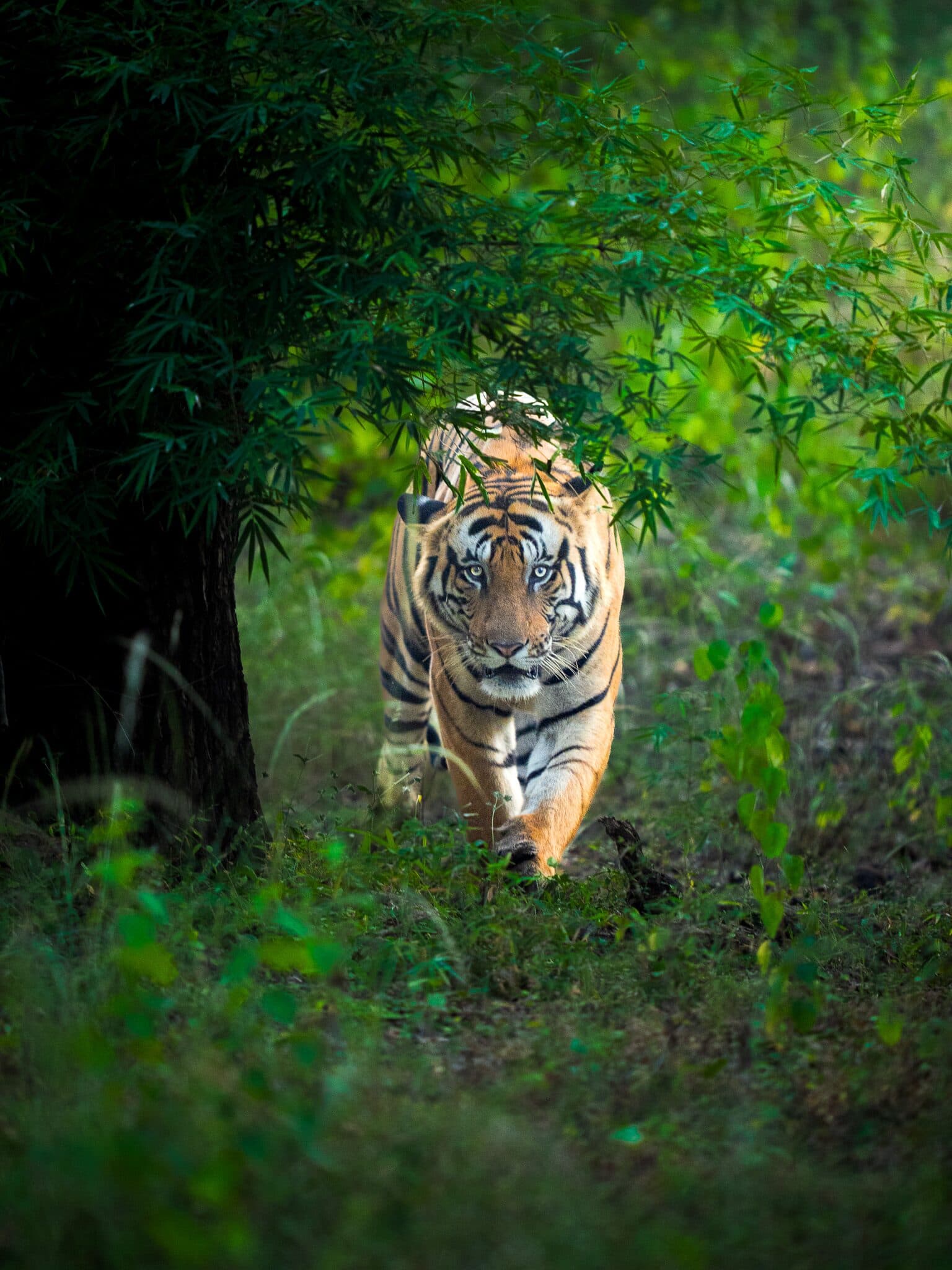
Bandhavgarh Tiger Reserve
A dense, intimate tiger landscape with heritage woven into the forest—often called the Tiger Capital of the World.
Bandhavgarh — quick facts
A short snapshot to help you choose season, zone, and trip length.
Why Bandhavgarh feels cinematic
Dense jungle, intimate sightings, and heritage woven into the landscape.
One of the densest tiger stages on earth—close-range sequences in sal and bamboo, shaped by legends like Sita, Charger, Dotty, and Spotty.
Bandhavgarh Fort, ancient caves, and Shesh Shaiya sit above a former Rewa shikargah—BBC Dynasties filmed in this forest. Original home of Mohan, founder line of captive white tigers.
Dense sal, bamboo clusters, and meadow edges let us plan both moody forest frames and cleaner open compositions.
Three safari zones
Bandhavgarh unfolds across Tala, Magadhi, and Khitauli—each with a distinct feel, light, and sighting style.
Dense sal forests, streams, and classic jungle texture—often the ‘storybook’ Bandhavgarh feel.
Sweeping meadows and sunlit edges—often great for clean backgrounds and open light.
Rugged terrain and thick bamboo clusters—dramatic sightings against textured backdrops.
What you might see
Sightings vary, but Bandhavgarh is built for big-cat storytelling and classic forest species.
Best time to visit
Season runs October–June. Closed July–September for monsoon rest.
Comfortable weather, great for long drives and patient tracking.
Hotter, but often higher movement around water and shade lines. Excellent if your goal is intensity—book popular zones early.
Getting to Bandhavgarh
Fly to Jabalpur, then drive about 3.5–4 hours into Vindhya tiger country.
Jabalpur connects from major Indian cities—then a road transfer to Tala, Magadhi, or Khitauli sides.
Railheads in the region connect to a final drive to the park.
Ideal in a circuit (Kanha/Bandhavgarh/Panna) with efficient transfers.
Photography tips
Three field-tested notes that matter more than gear hype.
Tala feels dense and cinematic; Magadhi opens into meadow light; Khitauli adds rugged bamboo texture.
Bandhavgarh shines when you have time for repeat encounters—territories, cub behaviour, evolving sequences.
Carry a lens cloth and protect your gear. Dry-season tracks can get dusty, but the contrast can look incredible.
A few frames from Bandhavgarh
Tap a frame to expand. Browse the full gallery filtered to this park.
Common questions
Which zone is best?+
How many safaris should I plan?+
Is Bandhavgarh good for non-photographers?+
Want us to plan your Bandhavgarh safaris?
Tell us your dates, group size, and your focus (photography, tracking, or a balanced journey).
Keep exploring
Jump to the next or previous park in our expedition list.
Bold tigers against ancient ruins and fort backdrops—rare frames found nowhere else.
A Ken River wilderness of ravines and plateaus—quiet, cinematic landscapes with a powerful comeback story.
Related parks
Compare a few other parks—each has a distinct style of safari, light, and landscape.
A photographer's paradise—winter light through sal forests, regal tigers, and the endangered hardground Barasingha.
Open dry deciduous forest, charcoal roads, and waterhole magnets—built for high-contrast, cinematic tiger frames.
Dry deciduous teak, wild dogs, and river-edge drama—Kanha’s quieter neighbour with a legendary tigress legacy.
Read before you go
These planning guides cover what matters most for your safari.